A Stranger Among Us

At 1 a.m in the morning of the 23rd December 2015, my mom, sisters and I exchanged our feelings of my stepfather, who would be buried the next day. As I listened to them talk about him, I wondered if there had been something I missed out. This man was kind, loving, and caring. He had been there when my mother needed someone to pay her bills and to give her shelter. To this, I share everyone’s sentiments, and appreciate his kind gesture and love to take us in when my own father rejected us. Yet why am I so defiant towards the thought of owning him as my father?

Sometimes, we seem so sure of something or someone so much that we are convinced that they will never change. Yet life has a way of disappointing us in unexpected ways. When I received the news that my stepfather was dead, I was emotionless. I was void of feelings, until hours later when it hit me that my stepfather was dead. That is when the turmoil inside began. For so long, I thought I knew the man whose name I carry. My memory of the past tells a story of a man, who did not care whether I was fed or not. He seemed to care less whether I was hurting or not and above all, whether I went to school or not. “What do you want money for? Women are trained to cook, raise children and take care of the house. Go and ask your mother for money.” At the age of 9, I felt like my world was collapsing over 1,500 cfa, which was my school fees in class 1 or grade 1. That is when I concluded that this man did not care for me. For many years, I held unto that thought.

As we, four women talked and listened to each other’s feelings, we realized that there was a lot of regret for the better part. My mother saw a man who cared for her and fought against unseen forces that controlled him, thus leading him to neglect those he cared for. As an eyewitness, she testifies to his last few years, where they demonstrated his total control of his mind; revealing the man, he was truly inside. In his last few years, he sought to re-establish the relationship he once had with his children and grandchildren. He was sorry for the things he had done and not done. He had been a difficult man to live with, but he accepted the responsibility for children he did not create. He had taken care of them in his own level and been a man who desired to be good. My mother thus concluded that much of what he did was out of ignorance and at that moment, I truly felt sorry for her and the husband she had lost. My two sisters felt guilty for not reaching out to him sooner. They felt they had neglected him and only reached out to him when it was too late.

What about me? I do acknowledge and respect the fact that he paid my mother’s bride price back and the price on all her children’s head. Like I mentioned earlier, I felt lost in my emotions, as I wondered what my family would think of me. I did not want them to think of me as ungrateful. Yet I could not just fake feelings and accept him as my father. However, I felt guilty that I never knew him and I wished I had given him a chance to know me for the woman I am today. I felt out of place for not being able to claim him as my father. Before I left home, I was shy, timid and a loner. I always felt out of place and found it hard to belong. While sitting with my family and speaking about my stepfather, I felt like a total stranger to them. It has been about sixteen years, which I grew up outside of my own home and tradition. I have been exposed to so many different cultures, which have shaped and built the person I am, and it would be difficult to break away from that knowledge.

Yet, in all of this turmoil, I found something else. I found forgiveness towards the man I thought I knew and acceptance of the man I never knew. If he could live a few more years, I would take the chance to see past the hard man I thought I knew; to the man everyone seemed to know. In all, I was grateful that my heavenly father was there to take care of everything and execute his will in our moment of confusion.
BEING A TEACHER


IMG_0669


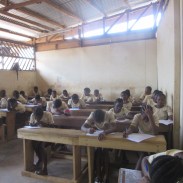
Teachers receive less recognition than they deserve. Few people would willingly enter overcrowded classrooms marked by rudeness, disruption, and, at times, near physical confrontation, or begin a job without training or orientation while still being expected to meet every obligation. Yet despite these challenges, the need to pass on knowledge remains.

Based on the brochure I received with information about the school, I understood that College Technique le Bon Berger (CEBER) worked with street children, orphans, sex workers, unemployed youth, underprivileged children, and others who had dropped out of school. Before discussing my role as a teacher, it is important to note that I went to CEBER seeking to serve as a guidance counsellor for the students, while also networking with other partners to help these children benefit fully from our social system. However, things did not go as planned. I was asked to teach the students and observe them at the same time—easier said than done.

Teaching at CEBER has been both rewarding and challenging. It has been a privilege to teach English as a Second Language to Francophone children, and the experience has strengthened my creativity, anger management, classroom management, and humility.

Challenges

Teaching Francophone adolescents has been difficult at times. Some openly express their dislike through words, gestures, and facial expressions, speak their native language during lessons, and make jokes that disrupt the class. Discipline is also a challenge, as some refuse instructions and argue when corrected. These behaviours create a difficult learning environment.

With such attitudes, one begins to wonder whether education is truly what some of these children need most at this stage. This situation has unsettled my neutrality because, as a teacher, I am expected to administer discipline, while as an observer, I am not. These two roles are in constant tension, creating a significant gap.

The lack of teaching materials has been another obstacle in teaching these young men and women. The students do not have textbooks, and there are no dictionaries in the library; as a result, the prescribed textbook cannot be used effectively. It does not help that many of them lack the foundations in English, yet teachers are still expected to cover a demanding syllabus.

Over the past few months, the discipline masters have also posed a challenge to my authority as a teacher. One stopped during the second month, but another continued to carry out his duties during lessons, which undermined my authority and encouraged the students to disregard it in the classroom.

Teaching time is also frequently lost. At times, students are absent because they have been sent to clean the chapel, while others arrive late because previous classes run over. As a result, 30 to 45 minutes of a lesson may be lost, leaving very little time for meaningful instruction.

Observations and responses

The students

Many international laws identify a lack of education as one of the factors that can lead children to join armed forces. Countries are therefore encouraged to address children’s educational deprivation during rehabilitation and reintegration. “7.78 Educational activities should take into account the children’s lost educational opportunities, their age and stage of development, their experiences with armed forces or armed groups, and the potential to promote psychosocial well-being, including a sense of self-worth. Children with disabilities should be included in educational activities with their peers” (The Paris Principles, 2007).

The past few months suggest that our focus may not always match the students’ needs. Some skip classes even when the teacher is present, leave after attendance, or seek to be sent out of class. Others show little interest in studying, despite efforts to connect lessons to practice. Group work has helped some students participate more actively, and in the second sequence, many in the higher classes showed encouraging progress.

Some students value the opportunity to study, while others seem forced into it. This dual role of educator and observer has highlighted the complex needs of students in urban settings, especially those whose families make sacrifices that the students may not fully appreciate. This raises important questions about what they still lack and how best to respond.

It is easy to describe a child as lazy or disengaged, but after three months of teaching, it appears that many are struggling with identity and personal circumstances. In one difficult lesson, it became clear that some girls came from unstable homes and felt ashamed of their family situations. Their anger and defensiveness often seemed to mask fear and embarrassment. This points to the need for deeper support beyond classroom discipline.

Resources

Given the limited resources, it has been more effective to let students use the vocabulary they already know, work in groups, and take an active role in lessons. Pictures and handouts have been especially useful in capturing attention, encouraging discussion, and helping students form sentences in the grammar tense being taught.

Discipline masters

Students have developed a habit of arriving late for class and blaming their tardiness on the discipline masters. After observing both the students and the discipline masters for three months, the matter was referred to the Senior Discipline Master. He explained that students are not allowed into class if they are late unless they present a Billet D’entrée. Regarding the discipline masters, they have no right to enter classrooms and carry out their duties unless the teacher permits them to do so. No one is supposed to interrupt a lesson for any reason. The teacher in the classroom has authority over that class, and students are not to leave until the lesson is over.

Rewards

The Cameroonian system measures performance largely through test results, and cheating remains a serious concern. Some students who had cheated were upset by the zeros they received in their second-sequence exams. One moment stood out, however: a student refused to claim his mark because he knew he had received help during the exam. His honesty was both striking and encouraging.

This was significant because the overall results were unexpectedly high compared with the students’ classroom performance, suggesting that cheating had been widespread. The students were reminded that dishonest success offers no real achievement. After hearing this, the student came forward, appreciated the message, and promised to work hard in the future.

A few days ago, some students said they wished they had someone they could trust and confide in. Their experiences of betrayal by friends and family confirmed the purpose that first drew me to this work: many of these students are hurting and need someone who will listen and, when appropriate, help address these problems with their families.

Although the experience has been challenging, getting to know the students and helping them improve in English has deepened my commitment to them. If even one student chooses hard work over cheating, then the effort is worthwhile. Teaching is not easy, but over time, it becomes a passion that turns obstacles into valuable lessons.

Another encouraging development was the Pedagogic Capacity-Building workshop training we undertook in November. It aligned with the principle of transforming students’ knowledge into action, which is also one of the objectives of human resource development. The focus was on developing creative and innovative students rather than simply filling them with theory. Teachers were encouraged to devise activities that created opportunities for students to think creatively. To achieve this, teachers themselves were encouraged to be spontaneous, innovative, and open-minded.

“Mawwiage. Mawwiage is what bwings us togethew today. Mawwiage, that bwessed awwangement, that dweam within a dweam. And wove, twue wove, wiww fowwow you fowevah and evah… So tweasuwe youw wove” says the impressive Clergyman from The Princess Bride.

As true as it can be, I was blessed and honoured to attend my uncle Alfred’s wedding on Saturday 21st November 2015. It was truly a blessing to partake in this happy moment of  his life, as he took Lovette (a beautiful name I must say) to be his truly wedded wife. Wink.

The Impressive Clergyman above has said all there is to be said. It was truly a blessed awwangement (arrangement), for many voices echoed this long after the wedding was over. They could not cease to praise the event, for it was peaceful and well organized. People felt included, appreciated and valued. People ate, danced (I did dance) and enjoyed a cheerful atmosphere.

God truly blessed their wedding and I was grateful to partake for my own selfish reasons. Hehehe. I was able to see my mom and my siblings and other family members whom I have not seen in years. So it was also a time to reunite with family, re-establish certain relationships and forgive where forgiveness had been denied in the past. A truly blessed opportunity to kill many birds with one stone (sorry for animal rights activists).

On a serious note, I was happy to receive a new addition in our family and to see a wonderful smile on my young uncle’s face. Lovette is a beautiful woman and I truly wish the best for the new couple in town. May the Lord God lead them and may they start looking alike soon.

Like the Impressive Clergy man, I would like to say, “Tweasure youw wove” and let no one else determine how you should run your household. May what you have between the two of you, be so strong that no drilling machine can pierce through it.

My beautiful mother (stood as a witness) and my beautiful older sister who made both my outfit and hers, and helped with the cooking. I was the family photographer.

Builder or Destroyer?

Living is an adventure filled with unknowns and no one really knows where they will be tomorrow; the events that will cross their paths or situations that will befall them. Every breath you take is a gift and every dawn you see is a sign of grace and mercy, for millions around the world where denied that pleasure.

The journeys we embark on,  in this adventure may lead us to places we have never thought possible. They can lead us to people from different cultures, who might become our long last friends. The exchanges we have with them might lay foundations for deeper relationships, a brotherhood or sisterhood, all depending on the bases of our relations.
This is considered one of the true beauties of living.
On this very adventure, we come across quests, which can hinder us from going forward or develop us into strong adventurers. These quests incite us to seek alliance with other adventurers, so that together, we are able to conquer and move forward. We learn to not only depend on our own might, but recognize that a helping hand sometimes is what we need to accomplish a task. When we make a decision to form an alliance, we know very well that it is a sign of trust and hope for victory.
Sometimes these alliances reward us kindly with ever lasting friendships, which are unbreakable. Many other times, these alliances end in betrayal and abandonment. In response to quests and betrayals, many people develop the fear of the unknown. Others develop a phobe for alliances, vowing never to lend a helping hand to someone else. The question here is; Are you the one who builds alliances or betrays and destroy them?
No one’s adventure is identical with another’s, yet there’s one objective, SURVIVAL. Everyone looks to a deeper and higher power to sustain them through this adventure and they pray for wisdom and knowledge and understanding, just so that they can face the journeys ahead.
Here is a piece of wisdom as you embark on your Life’s adventures by a Great Author. “Whatever you do, work at it with all your heart, as working for the Lord, not for men, since you know that you will receive an inheritance from the Lord as a reward. It is the Lord Christ you are serving. Anyone who does wrong will be repaid for his wrong, and there is no favouritism” Colossians 3:23-25.
The way you comport yourself on this Living adventure, the manner in which you deal with your alliances (friendships/friends) determines whether you are a builder or destroyer.
How does one know which they are?
Do you take what does not belong to you? Do you make false promises? In this new age of technology, where one can communicate across continents, do you block those you have formed alliances with, so that they have no means to get to you? In terms of honesty and truth, do you have someone’s money which you have had for months and years, always promising to speak to them; and in the last minute, you cut off all communication with them, because they are persistent over what’s rightfully theirs? Do you have a good conscience knowing they go hungry or need that money? Do you betray friends to gain favour from others? These are small and big quests on Life’s Journeys, which coerce one to take decisions which are either building or destroying.
Strengthen each other on your journeys and not betray the glimpse of victory that another has seen in your alliance.

HAPPY ARE YOU WHO CONFESS YOUR SINS

I can attest to what David says in Psalm 32. Many times I have found myself restless, irritated with the way I felt, which caused me to be frustrated by every little thing that people did around me. Even the most cute babies and children, who often charm me, would become annoying to me. In those moments, I find myself withdrawing from people, pushing them away because I either think they are probably making judgments on me. At the end of the day, when I can no longer accommodate such a feeling, I just cry and cry.

It became a pattern which I observed about myself, and God pointed out that it is often when I struggle with sin or unforgiveness in my heart that my feelings turn inside out,  confirming Psalm.32.3-4. When I did not confess my sins, I was worn out from crying all day long.  Day and night, you punished me, Lord; my strength was completely drained, as the moisture is dried up by the summer heat.

The next verse drafts the solution to my weariness and unmotivational attitude in many things in life. I continue to share in David’s experience as it shades more light in my self reflection,  as he says Then I confessed my sins to you; I did not conceal my wrongdoings. I decided to confess them to you, and you forgave all my sins.

After discovering the source of my turmoil and praying about it, God gives me overwhelming joy and happiness.  Daily he teaches me to make him a  part of my daily activity, relating to him and speaking with him as if he was physically present.  If someone meets me on the road or stands outside my door, they might think I am on the phone or I have a visitor in my room. In actual fact, a conversation with God is all there is.

Speaking to God is taking him as your friend.  How do you relate to a friend?  How can we sing, “what s friend we have in Jesus”, and yet we cannot relate with him as a friend and confide in him about everything.  Do you need someone to tell you to pray about it? He is your first confidant and he assures you that your sins are forgiven. We get caught up worrying about what others will think and thus forget who forgives our sins. It will take a long while for our human nature to forgive others or for them to forgive us.  But until they do, we need to confess our sins anyway and allow God to do the rest in those hearts that find it hard to forgive.

The Lord says, “I will teach you the way you should go; I will instruct you and advise you.  Don’t be stupid like a horse or a mule, which must be controlled with a bit and bridle to make it submit.” Even when God forgives us and others forgive us, we hold ourselves back, and often times we feel that we do not deserve their grace. This thus maintains our guilt and shame, creating depressing feelings of failure, worthlessness and good for nothings. We chain ourselves up, creating a prison wall, which makes it hard to break through. This can result in you feeling like a stupid horse or mule, which must be controlled with a bit and bridle to make it submit.

However David encourages us and I encourage you for I have seen and testified as truth, The Lord says, “I will teach you the way you should go; I will instruct you and advise you.  You that are righteous, be glad and rejoice because of what the Lord has done. You that obey him, shout for joy! Back to verse 1-2, he has pardon your sins, therefore be happy.  Why mourn and make your life difficult when God has lifted your yoke? Happy are those whose sins are forgiven, whose wrongs are pardoned.  Happy is the one whom the Lord does not accuse of doing wrong and who is free from all deceit.

DROPS OF JOY

Looking back in time, I will not shed a tear for the past that seemed to have torn my world apart. “While I was giving up on me, your patience was shaping my life story”, is a true statement made by the group “Virtues”, one of my childhood favourite groups. It is so easy for us to shed tears of sorrow, and sing lines such as, “though the sorrow may last for a night, but joy comes in the morning”. Who said you could not shed tears of joy? How often do we take time to reflect over God’s blessings in our lives, even in the mist of all the chaos in our lives? Do we often sit by the window, gazing out at the beautiful raindrops by our window and wonder if those drops could be tears of joy? Often times, poetry describes gloom when rain falls or the sky is dark and grey, reflecting a state of depression. Novels associate sad moments with “On that gloomy day” and movies, accompany heartbreaks, terrible news and horrors with showers of rain, creating a depressing effect, evoking strong emotions for the viewers. The recent movie, Sherlock Holmes towards the end, accompanies the little boy’s wasp sting and the mother’s frustration with showers of rain.

How often do we shed tears of joy, aside from receiving beautiful gifts, reconciling with a friend, having an engagement announcement, and making things right with one another and the list goes on? These are all glorious moments, which we should all cherish.

Sitting on my bed this afternoon, I looked out the window; painful memories came flooding through my mind. Without the slightest hesitation, I began thanking God for taking me through those moments. The next wave of memories was of all the prayers I have prayed over the years concerning my face, my faith and my job and I wrote those down on a napkin as the last set of prayers I would make concerning those items, especially m face and my job. The Message this morning ARE YOU TOTALLY COMMITTED TO GOD kept questioning my faith in God. Will I still trust in the Lord even if he does not take me out of my circumstances? In that moment, tears of praise and thanksgiving came flooding in my eyes, as I gave thanks to the Lord for his love, his protection and his shield over me all these years. Not only to me, but also on my family, I have seen his handiwork, and there is no one else but him who deserves the glory and praise. As I knelt, down and lifted my eyes to him, I prayed the last prayer of trust in his will for my life. I surrendered everything to him, because I knew he was in control.

As I stood up and stared in the mirror, I remembered one great prayer he answered not long ago, and new tears of joy came flooding in. If someone had picked through my door, he/she would have been confused, because I shed those tears as if everything within me was falling apart. It sure was falling apart with joy and happiness, because I could see the pains I had gone through and the deliverance right after that. Through my tears, I realized that it is rare that we find people shedding tears of joy, yet we are encouraged to give thanks to the Lord and magnify his name above all other name. It was through these tears, that I knew that God is always there in the mist of the chaos in our lives. We worry and wallow in our sorrows, that we pass him by with our next list of complains and worries, without really marvelling at his grace and blessings in our lives.

As the rain accompanied the tears rolling down my black spotted chicks, I smiled in the mist of the tears, knowing God has always watched me, and has always heard my prayers. I wondered if there was someone out there, focusing on their blessings and staring at the same rain dripping by their window as I was for it was an overwhelming experience. At that moment, I knew it has never been by my might, nor anyone else in my life, for me to reach where I am. The final analysis, pointed straight to him, who already knew what my life story was going to be, if I accepted it. I do not have to wait for the morning to have my sorrows cleared. I choose to be joyful and happy in the middle of my sorrows, because they may never end, but God will always be there to guide and lead my steps.

SUMMER VACATION

SWITZERLAND, GERMANY, FRANCE,ITALY click on this link to download the PowerPoint

Everyone longs to go on vacation somewhere, but when will they ever have that chance. Well, patience is a virtue as I have been told many times, and believe it or not, it is true. This summer, I got a chance to have a mini Europe tour. Below are memories of my adventure. No need for extra words.

These were my encouraging verses throughout the summer as I searched for jobs

Jeremiah 29: 11 “For I know the plans i have for you” says the Lord “Plans to prosper you and not to harm you, plans to give you a future and and hope”.

Hebrews 11: 1 Now faith is confidence in what we hope for and assurance about what we do not see.

Crossed Referenced with the following verses

Romans 8:24
For in this hope we were saved. But hope that is seen is no hope at all. Who hopes for what they already have?

2 Corinthians 4:18
So we fix our eyes not on what is seen, but on what is unseen, since what is seen is temporary, but what is unseen is eternal.

THE FUTURE IS THEIRS

Among my numerous applications for a job, I came across an organization, requesting for a Program Associate for Girl Rising. One of the goals was to Increase public attention, awareness, engagement, and actions around the importance of equitable, quality education for all and the need to eliminate gender disparity in education. There could be no better exemplary institution to display this goal than what I witnessed on Friday the 29th May 2015.

While attending my four-year-old niece’s graduation from Early Child hood Education (Pre-Schooling or Nursery), I witnessed in full the overall vision of the Nursery and Primary Education at Olympic Glory. Nobody needed to tell you as a visitor in that occasion, how these children are trained, and what they are trained in. You could tell just from the programme, that these children were being prepared for the future, through the responsibilities they were given in the programme. To start off, the Masters of Ceremony (MCs) were the children, a male and female. They coordinated the show right down to when they themselves needed to get awards and thus handed the responsibilities to the school Director.

Generating professionals

The birth of a new generation was emanating from this school in front of my eyes, and I say this with tears of joy. As a citizen of my country and as one who grew up in fear of the future, I saw through these children what we should have been trained in my years of schooling. What am I talking about?

At Olympic Glory, chiIMG_0004ldren are trained as News Anchors, Presenters, Speakers, debaters and professionals. Their debating topic for the day was “Should Girls have the same rights as Boys”. Their conclusion was yes. To some people it may have been very entertaining, but the message to the attendees was plain clear to everyone. They are also trained in Music, cultural dances and arts as well as languages. Many children wish for such opportunities, but they never do come. I watched some University students presenting their work and wondered if they ever went through any public speaking classes. They are either reading off their notes without any eye contacts or losing their train of thought because they forgot the material. Watching these children resonated a glimmer of hope within me, for the future generation. Quality education is being poured into them, as well as many other talents, which they can use along their quest for achievement.

Ethics

“Here at Olympic Glory, we promote Religious Tolerance. We have both Christians and Muslim students at our school, and we shall start off by having a Christian pray and a Muslim pray”, Says the young MCs. One of the key things that is destroying many countries, is the lack of Inter-Faith relationship. Some people believe that they cannot come to an understanding with any other religion. In Cameroon, some schools admit only Christians and other schools admit only Muslim students. However, they are a handful which admit both religions. The programme began with a prayer from both a Christian and a Muslim and it was actually putting the speech in action.

In many parts of the world, people believe that just because we think different, we cannot exist as neighbours. In Northern Ireland, it was heartbreaking to see the struggles of many people who wanted a United Ireland, especially when it concerned education. Some schools were only for Protestants and others were mainly for Catholics. Only about 5% of the overall education was mixed in Ireland. The protracted conflict, which had lasted for years was becoming a nuisance to the new generation that wanted nothing to do with it. Because the parents and grandparents built it in them that the others are enemies, they carried on the seed of hatred.

In Kenya during the March 13th elections in 2013, many young people were activists for peace. They wanted no part in tribal fights, because they sat in the same classes with students from various tribes. They saw each other as friends for life, and not as Kikuyus, Masaai, Luos or all the other tribes. Their speeches were directed to politicians, parents and teachers who tried to sow seeds of hate in them. Their pleas went out to the older generation which wanted them to continue their view of one another, and they said no to tribalism.

Sitting there through the presentations, I marveled at the education these children were receiving. If we do not sow these seeds in them while they are still young, who will teach them what is right and wrong? Right now, our soldiers are defending the country against Boko Haram in the North of Cameroon, and refugees as well as IDPs are swamping in from all directions along the Cameroon borders. Boko Haram is a terrorist group with hatred towards Western Education and Female Education. While causing chaos in Nigeria, they traversed to neighboring countries, causing chaos everywhere. Although people are not directly using the words, you can tell from their body language and eyes when they meet people from the North. One can just imagine them saying “Boko Haram”, because the North of Cameroon is where the Muslims are numerous, and the stereotype would be to associate them with the events taking place.

The essence of all these narratives, is the idea of tolerance. Teaching children to see one another as friends and not based on their religious affiliations, enables them to grow up not pointing fingers, but standing by one another to defend their friendships. The School Coordinator, mentioned in his speech that children are not the only ones taught about Religious Tolerance, but teachers as well. They have both Muslim and Christian teachers.

Training Staff

One of the things many teachers lack, is discipline in themselves. For an institution to function and prosper, it takes leadership skills, character management and capacity building. It does not really matter whether you are a business company or an organization or a charity organization. Your employees need to report to someone, and disputes need to be settled by someone who knows what they are doing. Olympic Glory has a dress code for all staff members, which means you are bound by it the moment you sign the contract. This is the first school I have observed in Cameroon that has a dress code for the staff. They are trained on how to handle the students and trained on how to be accountable to the parents as well.

Watching this little school go through its graduation programme arose some pride within. It is good to go away and come back to find that your country’s wind is blowing in the right direction. The strength of the wind may be very little and insignificant, but to notice that slim breeze, is enough to hope for a greater wind tomorrow.

PUBLIC JUSTICE

There’s a saying which goes like this “99 days for a thief and one day for the owner”. What it basically means is that those who never steal wonder why thieves get away with stealing. They as the owners of materials and items that have been stolen by others, can decide on their own account to go out and steal, since others have not been caught. Unfortunately for them, that day could be their unlucky day. Once they get caught, everyone will assume that they are the ones who have been stealing all along, when in actual fact, it was their first day as a thief. So what does this have to do with public justice? Public justice, is when justice for crimes committed is rendered to a criminal, by the public and not by legal authority, such as court or police. People like me who have studied human rights and advocate for justice through legal means, would find public justice quite repulsive. Every criminal as demanded by the Geneva Convention of 1949, has the right to defend herself/himself in court. Why is public justice still rampant?

Stories:

Motorbike incident

Within the outskirts of Yaoundé City, many motorbikes are used by the public as a means of transport to their homes, which are further into the bush from the main road leading to the main city. These branch off roads, have been considered dangerous for motorbike drivers around 7:00pm, because that’s the time when thieves operate. Many motorbikes in the last three weeks have been stolen in a particular area on the road to one of these areas. As these motorbikes kept disappearing, the bikers came up with a strategy to catch these thieves. The strategy was quite successful, in that two days ago, a girl got a bike from the main entrance, and made a phone call. When she got to her destination and told the biker to stop, he stopped and out of the bush jumped three men with cutlasses. They had been waiting for the girl to bring her prey to them, so they could take his motorbike and let’s not even imagine what they would have done with the biker. Unfortunately for her and her accomplices, fifteen other bikers who had been posted in that area to watch out for thieves surrounded them. The young lady was stripped, beaten and severely wounded. She was tortured by the public, and only the police rescued her from their hands. Together with her accomplices, they were carried off to jail. Yesterday, more accomplices of that little group came to collect stolen items, but unfortunately for them, they landed in the hands of the bikers again, and only the police’s intervention rescued them. These bikers were angry over the fact that their friends’ bikes have been stolen, destroying the motorbike business, as well as the means of survival for many of these youths here in Cameroon. This girl’s example with her accomplice demonstrated the collaboration between these thieves. They often get on a bike with previous arrangement of where the rest of the crew would be waiting, so that once the motorbike gets to the passengers’ destination, they can cease the bike. Cases of more beatings and severe torturing were reported, and being an eye witness, I saw the tyres of the truck that had come to collect stolen goods punctured by these motorbike men. The question is, should these men had gone this far? Most people would respond that yes, it was their right to go that far and others would say, no they should have handed them to the authorities.

Electricity incidents

In the same location as the above scenario, cases of stolen electric cables have been reported. It seemed like it was a ritual for the thieves to greet every new member of the quartier by stealing their expensive electric cables. Back in 2009, my uncle and aunt moved to this area, and within a month or two, their home was broken into, and their really expensive cable was stolen. In 2014, my sister and her husband finished building their home and moved in, just to have their electric cable stolen. Other close friends who had also moved in to this area also had similar stories, and this made all the residents to sleep with one eye open at night, just to make sure that their cable was safe. A young man almost lost his life about a month ago through public justice, when he was mistaken for a thief, because he was loitering around an electric pole, and refused to explain to the residents why he was there. They gathered around him and were about to flock him when he said, he was only out for a cigarette. He also said he was a biker, but no one believed him because they had never seen him around there. He was only rescued by another biker who recognized him and vouched for him that he worked with them. These people had complained about the insecurity of their areas to the police, but nothing has been done. In the past month and half, since being home, more than 5 cries of “O Voleur” have been heard in the neighbourhood. Once a thief is caught, they carry all their anger for all the items that had been stolen from them, and punish that one person, who might not have had anything to do with the previous theft. In Cameroon, cries of “thief” are responded with immediate action by the public. They catch you right there and then, and render justice on you, serving as an example for others to think twice the next time they try to steal from someone.

Sexual Assault

Cases of sexual assault have been reported, where young girls are taken advantage of by men and nothing is done against them. For example, in Yaoundé, a young man was charged with multiple rape cases and was sentenced to a couple years in prison. About two weeks later, he was out on the streets boasting about his freedom saying he cannot be touched. So what do we say of the justice system, as well as to these kind of people? What should be done to them? If the legal system cannot render justice on them, who then can? You as the parent of a child who has been sexually assaulted, what would you do? Well, this is what some parents would do, as well as the community. In the same city, as well as other cities in Cameroon, a young lady went to carry water, but was met by a man with a cutlass. He got a hold of her and she started struggling and screaming. Another man was passing by and heard her screams and went to her rescue. He engaged with the other man and got stabbed a number of times. This story was featured on Canal 2, a Cameroonian TV Station. As they fought, the girl ran and called a crowd, which came and got a hold of the rapist and burnt him. When the police got there, he was all ashes, and they could not blame anyone, for they all stood together and made the decision together to burn the man. So what should happen in this case?

Justice Systems

Many other stories of theft and rape have been reported, which have resulted in horrendous methods of justice carried out against these criminals. For example, in other regions of Cameroon, methods such as pouring kerosene on the criminal and putting them in a tyre set with fire, have been reported. Mixing water with cement and forcing the criminal to drink has also been another cruel method. As an advocate for human rights and not writing off the chance for repentance, I would look at these methods as barbaric and no human should succumb to such treatment. Some people would read this blog and call me an over studious student who has no idea what it means to live in fear and in such conditions. Others would agree that these methods are a beyond justice and shouldn’t be used. However, I write not as one who has never been a victim of the above. For precise this reason, I write as one who has been through rape before at the age of seven and eight, and fully understand the pain of having  someone else trample over your body like you were a rag.

It is hard to believe in our justice system, especially when people have money to pay themselves out, or they have money enough to have the best suites in prison reserve for them, such that they still have communication with the outside world, carrying out their business as usual, and not living as prisoners. Others have wealthy families to bail them out, so that they can continue doing their dirty work. With such a justice system which allows bribes, why would the public not take action to protect that which is theirs? They have believed in the “justice system” to carry out its duties, but it has failed them. So why shouldn’t they be allowed to take matters into their own hands? Compared to some parts of Kenya, I feel more secure in Cameroon, when I walk around, because I know if I scream thief, people would run after the thief and catch him. Whereas in Nairobi, everyone allows the thieves to harass the public as much as they want, even inside the matatus (public transport: buses). My Kenyan mom sat in a matatu and witness theft, and everyone else witnessed it, but refused to speak up, because of fear that they might be the next victim. Being who she was, she spoke up and was targeted. She never blinked or took back her words, but the Matatu stopped and these men were kicked out. This does not mean I advocate for public Justice.

I believe that justice is still plausible in this messed up system. A number of NGOs are rising up and advocating for the rights of the citizens, and these are locally based. They stand to advocate for the needs of the citizens, and to take them to the government and make the government accountable. A few years back, these NGOs were nowhere to be found. Hence what I am really calling for, is patience. The past has been hard and the present is no better. However, we progressing towards a better Cameroon, and our young people are coming to understand what it means to bring change in a country. If the system will not bring that change to our communities, our communities will make them accountable to the public. Make the system responsible by denying criminals from early release from prisons. Make the system fulfil their duties by letting these criminals serve their full terms in prison. If it means life imprisonment, then make the government responsible for protecting the citizens. I believe we can get there, if we all work together to clean up our country the right way.

WHEN WILL JUSTICE COME?

Corruption is a word I began hearing about from a young age before I knew what it entailed. I heard complains of what the authorities were doing, which brought frustration and resentment. I grew up fearing authorities of all levels, because I fully didn’t understand the system and wasn’t sure what my rights were. I only took the adults words for what right and wrong was. Little did I know that I was allowing myself to carry on other’s worldviews and perspectives? The more complains I heard, the more frustrated I got. Being a victim of some of the violence frustrated me so much that I wanted to do something about it. How could I do anything if I didn’t understand anything? I ventured over the years to understand the rights and duties of a citizen, as well as the duties of authorities representing the civilians. I just recently returned home from my studies, and it is really saddening to think that even after the years I have been absent things haven’t changed so much. New rules and regulations have been instilled, but the same old habits remain. As a citizen of my country, I want to understand the problems of my people and see what difference I can make, and I know it will not be so easy. However, I am ready, because I have a greater power behind me. How will I help my people?

Understanding people’s attitudes

If you want to know the problems of a country, get to know the citizens to understand their attitudes and behaviors. As I sat in the front seat of a bus heading to my village from Bamenda City, we passed a number of road blocks. The bus is a 9 sitter, but we had 16 people inside. From what I learnt in school, one would conclude that it is the drivers who bring corruption making the system not to function as appropriate as it is meant to be. We could begin by arguing that they should not carry overload, in order to avoid paying a bribe on the road. That too would be a valid point, in that a good system consists of checks and balances (Hackett, 2008;5-6), where everyone has their documents abiding to the system, thus enabling the government to run smoothly. If all the drivers obey the rules of the roads and did as the system required, then that would bring down corruption in that area of the state, providing transparency.

It is very simple to have a beautiful theory that enables everyone to live happily ever after, but if you see from the people’s point of view, it will be obvious that things are not as easy as it sounds. After observing the first two roadblocks and 2,000 CFA disappear from the driver’s pocket, I asked on the third roadblock what the money was for. For the next 30 minutes I was given a lecture, which widen my understanding into the daily lives of taxi drivers and bus drivers on the roads

Jonah’s story

From Jonah’s (name has been changed) perspective, life is not easy for any taxi driver or bus driver. We give to these people to avoid spending much time with them. It is not because we enjoy disrupting the system, but it is because they push us to do things we do not want to do. I started off as a taxi driver and I used to make sure I had all my documents in order. When the traffic controlled stopped me and found all my documents intact, they would not let me go and would try to find a small problem either with my passengers or my car. If they found none, they would keep me for more than 30 minutes, expecting me to give them 500 cfa at least. When I refused, they would hold my documents. This made me frustrated and angry. When I started speaking up for my rights, they put a special mark on me. They gave me a nickname known as “Netman”. Casually explained, it means “perfect” man. I didn’t care what they called me. I just wanted to be on the right side of the system, but they always try to find fault. If by any chance I had just one document that was expired for a day, I would have to pay not less than 7,000 CFA.

After following all the rules I was targeted by those who should praise me for being an honorable citizen. Therefore, I would rather carry my overload and pay the 500 cfa or 1000 cfa, which they will still suck out of me even with all my documents in place. We do not carry overload and pay these people because we want to, but because they leave us no choice. I however always have all my documents in place. I have just added carrying overload and paying them the money they want.

If we do not do it so, they will give you a ticket, which shall land you in court and from there, you will spend much more money than it is necessary. So it is better to give them the 500 cfa or 1000 cfa to prevent wasting much money.

This does not mean we are not working towards fixing things. We cannot go on strike, because the authorities have threatened to shoot us if we carried out a strike. We have a group meeting for drivers coming up. We are trying to see how we can get our problem heard up top. It will not be easy, but we are going to be heard somehow. We don’t have any authority to back us up, but we will be heard somehow.

Even if this is taken to their authorities, they will not do anything, because the money collected ends up going back up the ranks to the higher authorities to give their share of the spoils.

What Next?

Listening to Jonah provided an understanding into the lives of these drivers. What we might assume from the surface to be a people’s system, often results from the attitudes of officials. These attitudes shape the way people respond to them. Jonah is not the only victim of road control. How can this be fought against? What mechanisms are there to enable the authorities to fulfill their duties and maintain their roles without frustrating the citizens? Hackett, N. Linda (2008:5-6), pointed out what a good government should look like as prescribed by the founding fathers in America. Checks and balances in the American constitution has been a way designed by the founding fathers to fight against corruption. However, not everyone can wear the same shoe. What might work for another country may not necessary work for others? As Jonah spoke, ideas flooded my mind. What if, a human rights advocate sat in the car and recorded the scenario? What if an accountability group was chosen to make sure that the authorities were doing their job appropriately? This is not the first time they have made complains against the police. We need mechanisms in place that are effective and transparent. More or less, there’s need for an advocate, who will provide evidence and see to court matters and proceedings. Unless something is done to fight this corrupt system, people will keep asking, “when will justice come?”