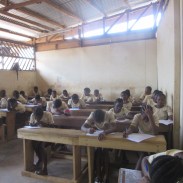
Teachers receive less recognition than they deserve. Few people would willingly enter overcrowded classrooms marked by rudeness, disruption, and, at times, near physical confrontation, or begin a job without training or orientation while still being expected to meet every obligation. Yet despite these challenges, the need to pass on knowledge remains.
Based on the brochure I received with information about the school, I understood that College Technique le Bon Berger (CEBER) worked with street children, orphans, sex workers, unemployed youth, underprivileged children, and others who had dropped out of school. Before discussing my role as a teacher, it is important to note that I went to CEBER seeking to serve as a guidance counsellor for the students, while also networking with other partners to help these children benefit fully from our social system. However, things did not go as planned. I was asked to teach the students and observe them at the same time—easier said than done.
Teaching at CEBER has been both rewarding and challenging. It has been a privilege to teach English as a Second Language to Francophone children, and the experience has strengthened my creativity, anger management, classroom management, and humility.
Challenges
Teaching Francophone adolescents has been difficult at times. Some openly express their dislike through words, gestures, and facial expressions, speak their native language during lessons, and make jokes that disrupt the class. Discipline is also a challenge, as some refuse instructions and argue when corrected. These behaviours create a difficult learning environment.
With such attitudes, one begins to wonder whether education is truly what some of these children need most at this stage. This situation has unsettled my neutrality because, as a teacher, I am expected to administer discipline, while as an observer, I am not. These two roles are in constant tension, creating a significant gap.
The lack of teaching materials has been another obstacle in teaching these young men and women. The students do not have textbooks, and there are no dictionaries in the library; as a result, the prescribed textbook cannot be used effectively. It does not help that many of them lack the foundations in English, yet teachers are still expected to cover a demanding syllabus.
Over the past few months, the discipline masters have also posed a challenge to my authority as a teacher. One stopped during the second month, but another continued to carry out his duties during lessons, which undermined my authority and encouraged the students to disregard it in the classroom.
Teaching time is also frequently lost. At times, students are absent because they have been sent to clean the chapel, while others arrive late because previous classes run over. As a result, 30 to 45 minutes of a lesson may be lost, leaving very little time for meaningful instruction.
Observations and responses
The students
Many international laws identify a lack of education as one of the factors that can lead children to join armed forces. Countries are therefore encouraged to address children’s educational deprivation during rehabilitation and reintegration. “7.78 Educational activities should take into account the children’s lost educational opportunities, their age and stage of development, their experiences with armed forces or armed groups, and the potential to promote psychosocial well-being, including a sense of self-worth. Children with disabilities should be included in educational activities with their peers” (The Paris Principles, 2007).
The past few months suggest that our focus may not always match the students’ needs. Some skip classes even when the teacher is present, leave after attendance, or seek to be sent out of class. Others show little interest in studying, despite efforts to connect lessons to practice. Group work has helped some students participate more actively, and in the second sequence, many in the higher classes showed encouraging progress.
Some students value the opportunity to study, while others seem forced into it. This dual role of educator and observer has highlighted the complex needs of students in urban settings, especially those whose families make sacrifices that the students may not fully appreciate. This raises important questions about what they still lack and how best to respond.
It is easy to describe a child as lazy or disengaged, but after three months of teaching, it appears that many are struggling with identity and personal circumstances. In one difficult lesson, it became clear that some girls came from unstable homes and felt ashamed of their family situations. Their anger and defensiveness often seemed to mask fear and embarrassment. This points to the need for deeper support beyond classroom discipline.
Resources
Given the limited resources, it has been more effective to let students use the vocabulary they already know, work in groups, and take an active role in lessons. Pictures and handouts have been especially useful in capturing attention, encouraging discussion, and helping students form sentences in the grammar tense being taught.
Discipline masters
Students have developed a habit of arriving late for class and blaming their tardiness on the discipline masters. After observing both the students and the discipline masters for three months, the matter was referred to the Senior Discipline Master. He explained that students are not allowed into class if they are late unless they present a Billet D’entrée. Regarding the discipline masters, they have no right to enter classrooms and carry out their duties unless the teacher permits them to do so. No one is supposed to interrupt a lesson for any reason. The teacher in the classroom has authority over that class, and students are not to leave until the lesson is over.
Rewards
The Cameroonian system measures performance largely through test results, and cheating remains a serious concern. Some students who had cheated were upset by the zeros they received in their second-sequence exams. One moment stood out, however: a student refused to claim his mark because he knew he had received help during the exam. His honesty was both striking and encouraging.
This was significant because the overall results were unexpectedly high compared with the students’ classroom performance, suggesting that cheating had been widespread. The students were reminded that dishonest success offers no real achievement. After hearing this, the student came forward, appreciated the message, and promised to work hard in the future.
A few days ago, some students said they wished they had someone they could trust and confide in. Their experiences of betrayal by friends and family confirmed the purpose that first drew me to this work: many of these students are hurting and need someone who will listen and, when appropriate, help address these problems with their families.
Although the experience has been challenging, getting to know the students and helping them improve in English has deepened my commitment to them. If even one student chooses hard work over cheating, then the effort is worthwhile. Teaching is not easy, but over time, it becomes a passion that turns obstacles into valuable lessons.
Another encouraging development was the Pedagogic Capacity-Building workshop training we undertook in November. It aligned with the principle of transforming students’ knowledge into action, which is also one of the objectives of human resource development. The focus was on developing creative and innovative students rather than simply filling them with theory. Teachers were encouraged to devise activities that created opportunities for students to think creatively. To achieve this, teachers themselves were encouraged to be spontaneous, innovative, and open-minded.
 Goody'Nglish
I don’t know why but that story of Esther came to mind when I was reading this post, ‘… for such a time as this.’ But these are interesting observations and come to think of it, you are slowly turning into a Guidance Counselor, that was just field work that had to be done before you get to the good stuff.
Thanks Wamz. I actually applied for a Student Counsellor’s post, which they didn’t have. God has placed a burden on my heart for justice and integrity.
Interesting Goodness!Keep writing! It’s a pleasure for me to actually discover what teachers and students in Cameroon can have as difficulties.I have studied in Cameroon but I’ve always been in the position of student..never an observer and now there are many things I discover through your writings.Thanks
Thanks Laurena. As a student in Cameroon, I realized that students needed to be heard. Sadly, no teachers have been trained to listen. Even though there might be a few who know what to do, there is little support. There’s need for counsellors in our Cameroonian schools.